
Before I start – I do have permission to share this story. We don’t discuss our clients with anyone, but this client asked me to tell her story as an introduction to an important aspect of adopting a kitten.
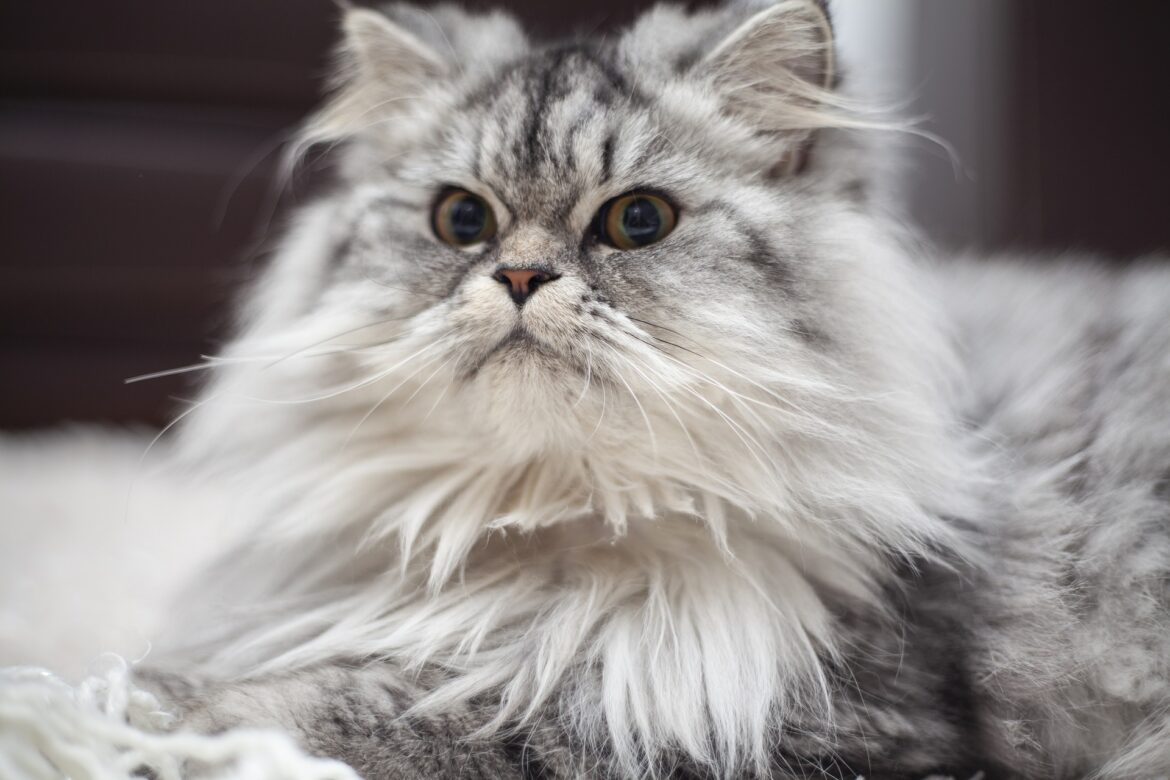
Some years ago, this client adopted a three-month-old kitten called Darth. She’d had to negotiate to persuade her husband to accept another cat into the household. He’d agreed, on condition that it was short-haired – because he felt that long-haired cats were too much effort to keep groomed. Darth was short-haired, as a kitten. But kittens grow up… and Darth grew up to be long-haired and very, very fluffy. The owner described him as ‘Not so much a cat as a dandelion clock that yowls when it’s dinnertime’.
Long, long hair
When you adopt a kitten, you rarely know what they will be like as an adult. That slightly fluffy, scruffy little kitten became a huge, muscular cat with very long hair. Luckily for his owners, Darth’s fur didn’t form tangles or mats, so he kept himself groomed and… fluffy. There are different kinds of long-haired coats, and not all kinds can be maintained by the cat that wears them.
Cats may have two or three of the three different types of fur in their coats;
- Closest to the skin are the down hairs; short, fine hair that insulates the cat from cold. It is usually off-white or pale grey, and is not visible unless you part the outer coat.
- Awn hairs are longer, thicker and more pigmented, protecting the down hairs beneath from rain and snow.
- The outermost layer is formed by guard hairs. Guard hairs are the cat’s first line of defence against dirt and damp. They are stiffer and longer than the base coat, and their colouring forms the colour and markings of the cat.
It’s the down hairs that form mats and tangles, knitting themselves into thick strings and pads of felted fur that are uncomfortable for the cat. This can happen to short-haired cats who are too elderly or arthritic to groom themselves effectively, but long-haired cats have matting problems throughout their lives. Either way, get your cat used to the fact that you will brush or comb their fur from their first weeks in your home. Short haired cats will feel the benefit of having their coat brushed to remove loose hairs, especially in spring; long haired cats may need daily combing to keep their fur mat-free.
Grooming routines
If you do have to remove mats from fur, don’t tug the comb through until the mat is broken apart – try pulling your own hair to feel how uncomfortable that is. Even the most tolerant cat will learn to head for a hiding place at the sight of the comb after a few harsh grooming sessions. Best to comb often and gently, teasing out one small group of mats and then letting the cat have a treat. Don’t restrain the cat, or it will associate grooming sessions with being trapped. End each grooming session with gentle strokes of the hand over the fur as a reward and reassurance.
Any mats or tangles that are too tightly knotted to be combed out will need to be cut out, but be very careful. A cat’s skin can be very loose (especially if the cat is elderly or unwell) and it is easy to nick the skin while cutting the mat. Best to slot the teeth of the comb through the mat and check that there is nothing in the teeth except fur before cutting the mat above the teeth – using the teeth as a guard for the cat’s skin.
You can find a cat groomer you trust to do this job for you, but if you can care for your cat’s long coat at home it will help if the cat arrives home one evening with a fresh set of tangles, burrs or dirt in the fur.
The client in question agreed to adopt another cat after Darth passed away. Her latest cat… has very long, very fine hair that forms dense mats and long knotty strands of tangles on a daily basis. I am not going to repeat the husband’s opinion.
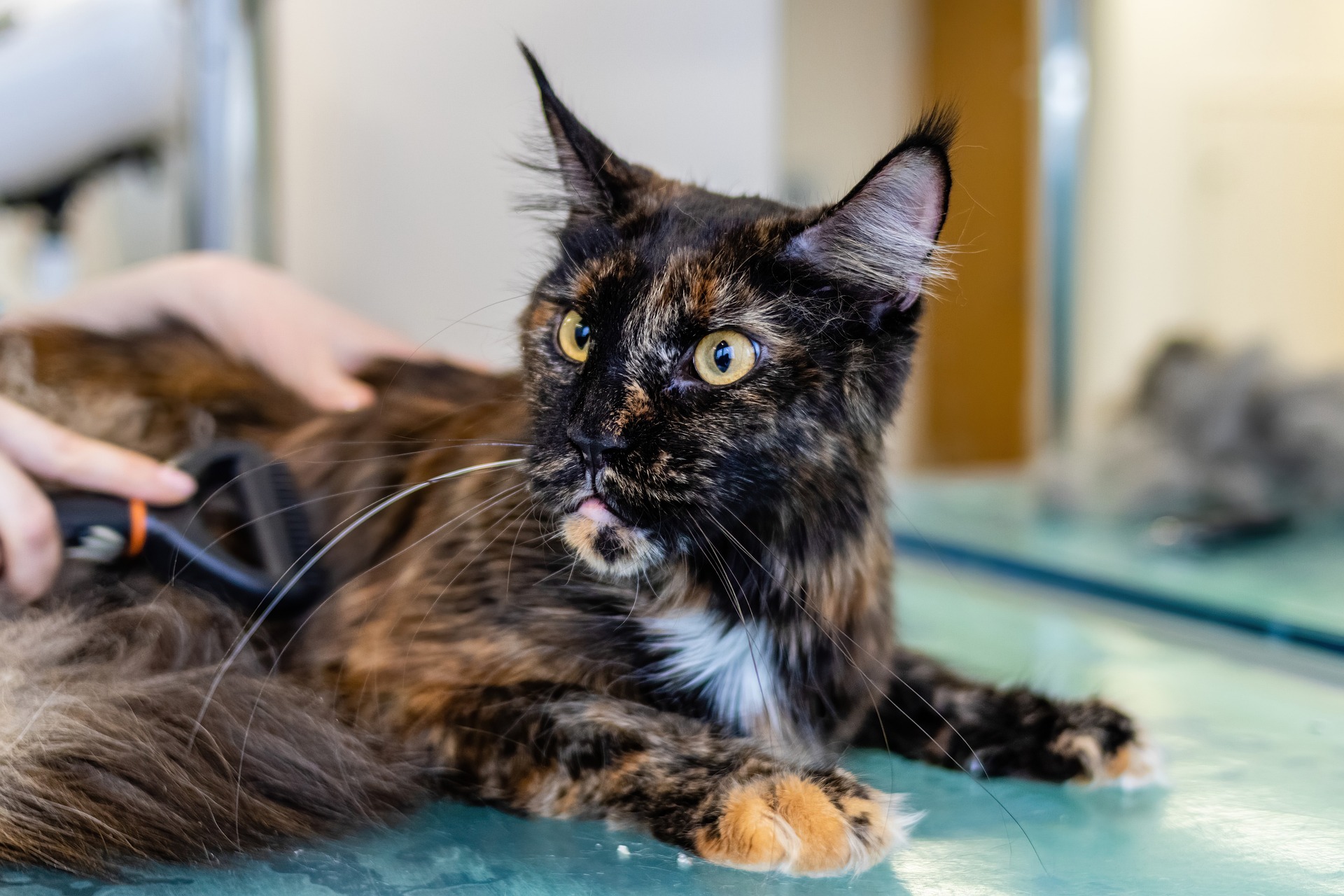 Photo of a cat being groomed by Alektas (Pixabay)
