
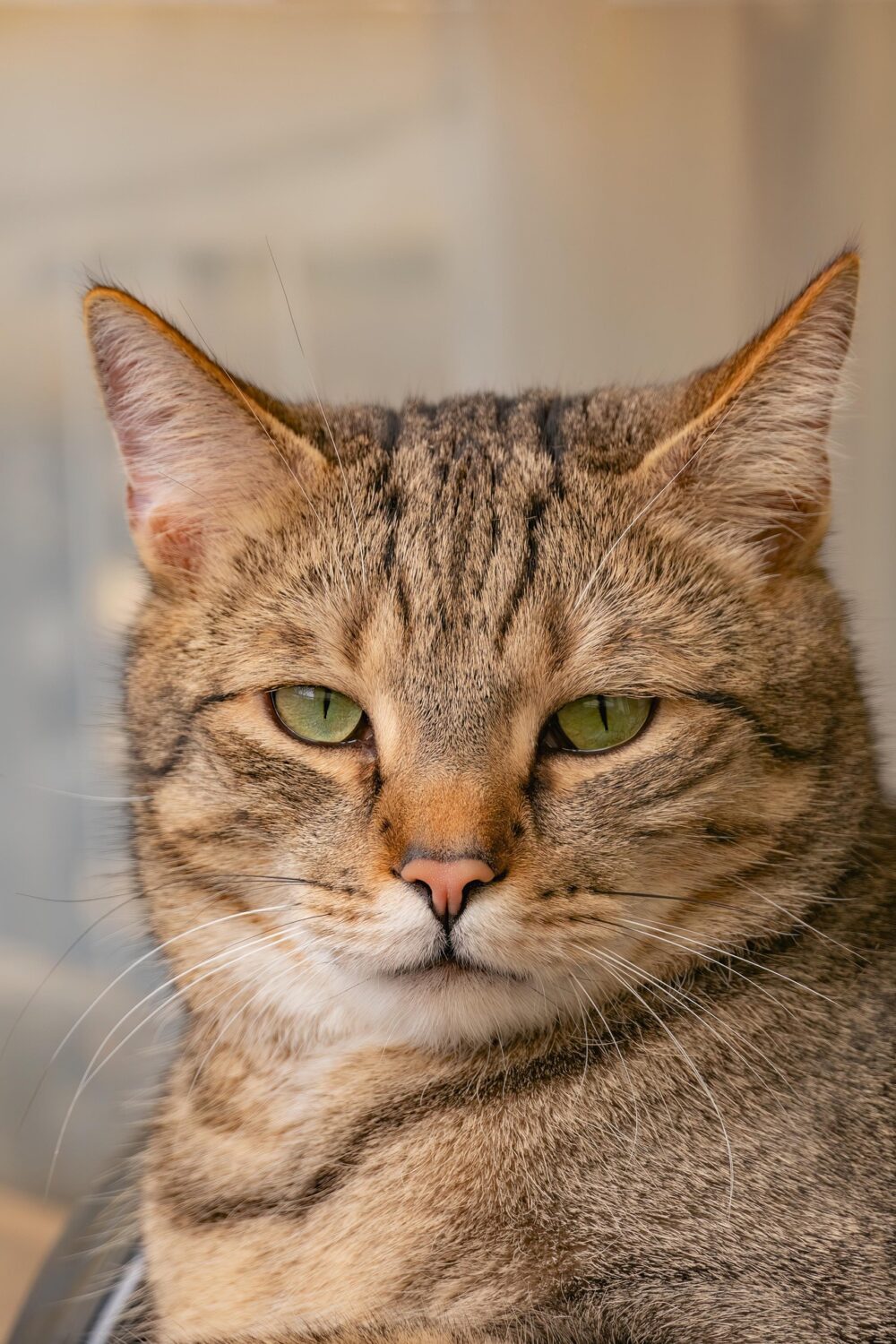
So far this year, we’ve told you about the refined special breeds. The mischievous Rexes and the giant fluffy kids of Maine and Norway. But many people have a much simpler creature sleeping on their sofa – the British Domestic Short Haired cat.
Origins of the British Short Hair Cats
The original ordinary short haired cat is descended through hundreds of years of random breeding between local strays, farm cats and escaped pets. The Roman settlers brought semi-tamed cats with them as pest controllers for their grain stores and some of these cats remained after the Romans retreated. And of course, traders have been sailing to Britain since long before the Romans arrived and long after they left – bringing their own rat-catching felines to come and join the party here.
I should add that we have a native feline – Felis felis syvestris, the European wild cat. Once common throughout the British Isles, they are now found only in Scotland, usually in dense woods rather than the domestic pet’s preferred territory of open grassland. Some of today’s house moggies surely have a little wild cat far back in their ancestry.
The pure-bred
The common short-haired moggy is a really mixed breed. You can invent the story of their ancestors – maybe an escaped Siamese as a grandmother, a ragged-eared barn cat for a great-grandfather. The pure-bred domestic short hair is a different matter. ‘Darling,’ they would tell you; ‘Our ancestry has been designed.’
The practice of deliberately breeding short-haired cats to produce a certain style of handsome has a short history. The fashion for the exotic long-haired breeds began to lose its appeal at the turn of the twentieth century, and people bred the most attractive short-haired cats they could find to produce cats with dense, short fur, compact bodies and stocky legs. One by one, the cat breeding registries acknowledged these as separate breeds.
Even the pure-bred domestic short haired cats have the same calm nature as their back-garden cousins, meaning that people welcome them into their homes. They are tolerant and affectionate, though they all prefer to have all four paws on the floor – picking them up for fuss will ruffle their composure.
Characteristics
The general pure-bred British shorthair class in cat shows allows any colour of fur and eyes, though there are specialised forms of the breed which have been selected for particular fur colour or markings. For example;
BRITISH BLUE
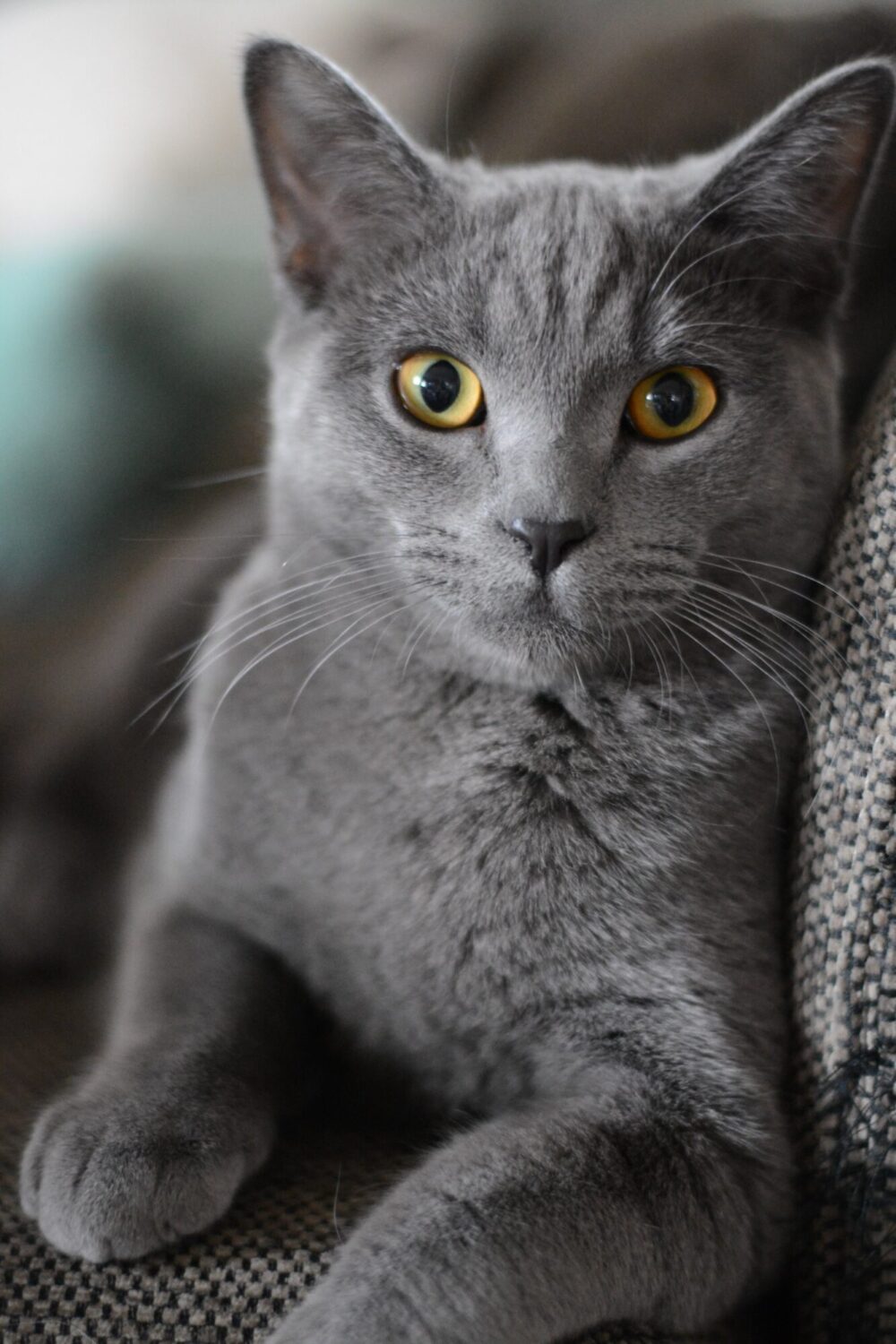 A steely grey fur colour, slender body and delicate head with green or golden eyes. The Russian Blue is chunkier, solid in the body and with a rounded, chubby face.
The British Blue is often the first thing people think of when pure-bred domestic short haired cats are mentioned, forgetting that tabby cats can also be pure-bred.
(Photo courtesy of Pixabay)
TABBY
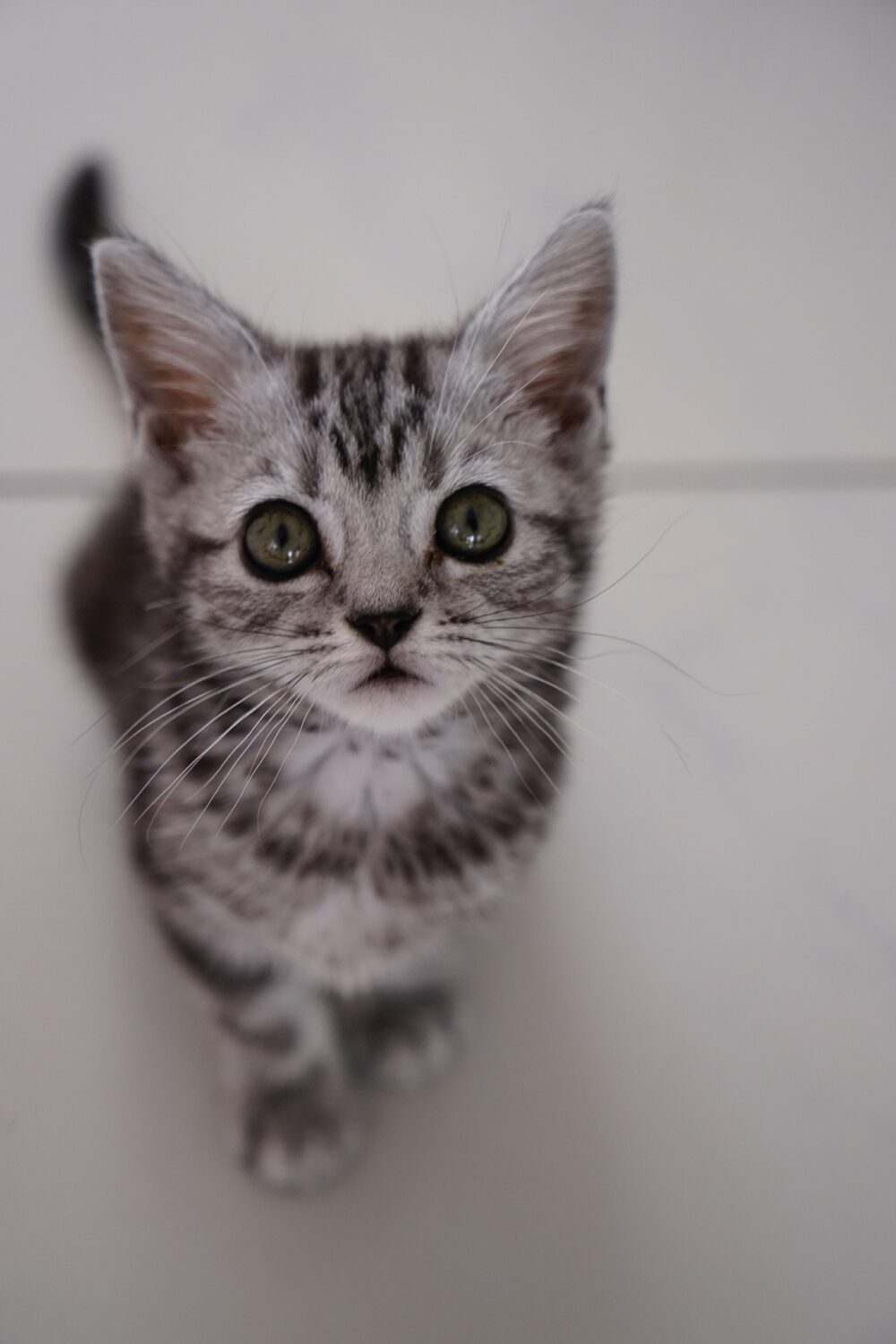
Every tabby has that ‘M’ pattern on its forehead, but there is a wide variation of markings along the theme of stripes or whorls. There are silver tabbies with black stripes on a silvery grey background, black tabbies with broad black markings over pale fur and brown tabbies – a toffee ripple of cream and brown and caramel.
Ginger cats are also classed as tabby – their fur always has distinct stripes of varying shades of orange and that ‘M’ on his forehead (the majority of ginger cats are male). Calico cats have patches of ginger, brown and white, and are considered to be tabby calicoes if there is a striped pattern among those patches.
(Photo by JenniferStr, Pixabay)
TORBY
An intriguing mixture of tortoiseshell – black and brown, sometimes with white bellies – with the distinctive tabby striping in the fur
We love them all
A domestic short hair doesn’t have to be registered as a pure breed to be adorable. A pure black moggy from a back-garden litter is just as lovely as one descended from generations of carefully selected beauties. Our customers bring us so many of these affectionate and placid creatures that we can spend every day with a domestic short hair purring in our arms.
Want to treat your cat to a stay at our cattery? Contact us!
