
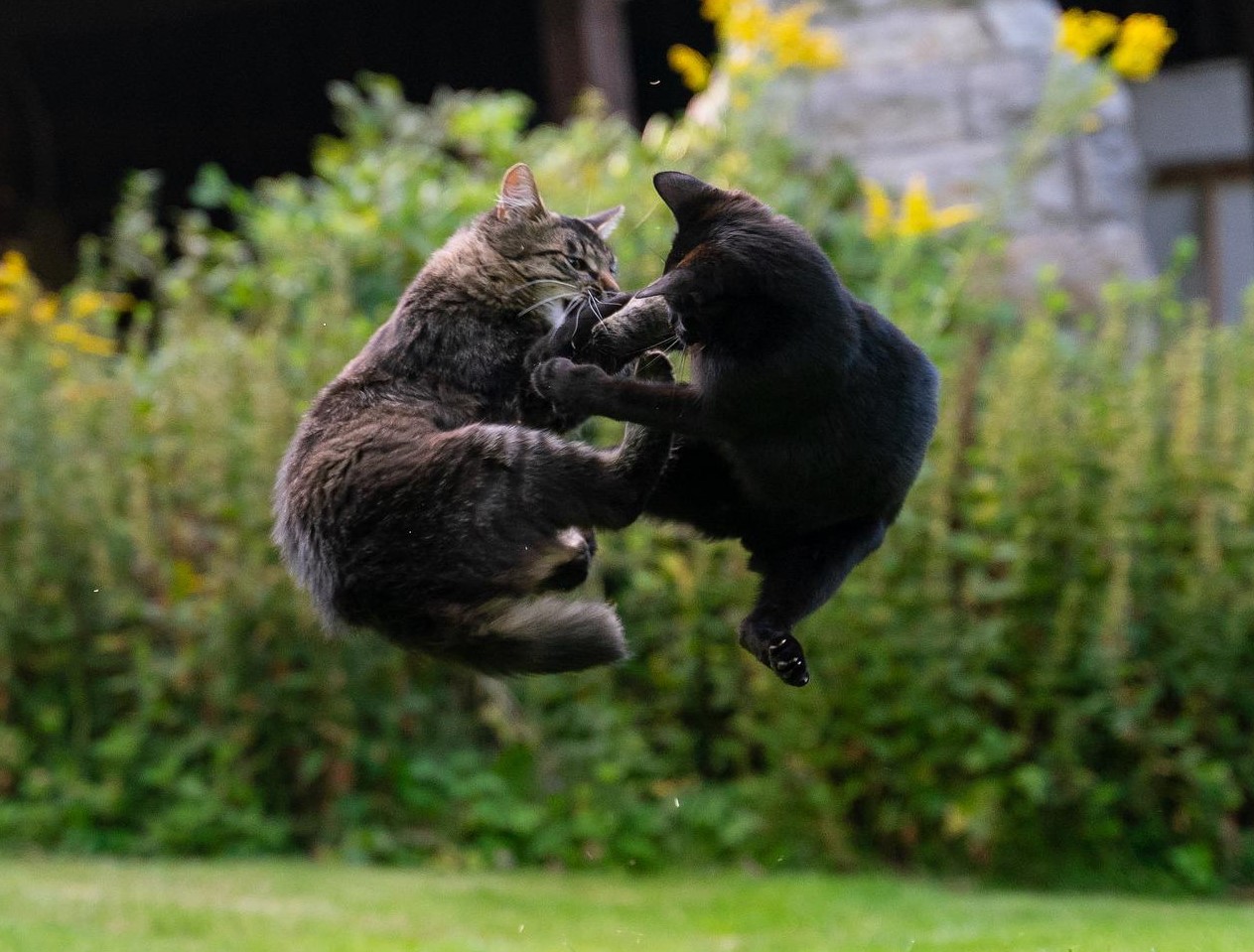
 We’ve been running the Paws for Thought cattery in Sible Hedingham since 2010, and we love seeing the same cats return year after year to relax in our pens. Occasionally, we see a familiar cat family with a new addition or two. Whenever this happens, there’s been a lot of hard work by their humans to introduce the new cat.
Before you adopt a new cat, stop and consider whether it’s a good idea. Think about how many cats you have now and how much space you have. The more cats you add – and the smaller the space they inhabit – the less chance that they’ll all get along well. Ask yourself whether you have planned anything a cat will find disturbing – such as very long holidays or major building work – and should delay an adoption until this is completed.
For the best chance of success, choose the right cat to adopt. For example, if your resident cat has free access to the garden, don’t adopt a cat that must be kept indoors – sooner or later, the indoor cat will follow your resident out of the cat-flap. Find out whether a cat put up for adoption is shy, boisterous, aloof or a snuggler – think how that personality will fit into your household.
Adding a new cat to the house needs a lot of planning. Each cat group needs a safe place to eat and to drink, and a litter tray they can use without being afraid of other cats competing with them for the chance to eat, drink or poo undisturbed. The traditional rule is one litter tray per cat plus one extra, but the really important thing is to keep the trays clean.
Even if both new and resident cats seem to be sociable, confident and friendly, and even if either or both has lived with other cats before – don’t let them meet as soon as the new cat arrives in the house. There’s a small chance that this will work… but if it doesn’t, it will damage the relationship from the start. Think of your feelings if you arrive at work one day to find a new colleague sitting at your desk, pushing your family photos away to make room for his own photos. Think how you would react – “Hey, that’s my territory!” It would be a long time before you could trust a person you’d first met in this way. First impressions count, for people and for cats.
Keep the new cat shut away in one room at first, and don’t worry if the resident cats growl at the door. Spend time with new and old sets of cats, giving them fuss and playtime. Swap the bedding and litter tray of the resident cats and the new cat, to let each get used to the smells of the other. If you can – let the new cat explore the house while the resident cats are locked outside, and later, take the new cat out of its ‘safe room’ for a short while and let the resident cats in to explore and sniff around.
Gradually work towards having the two sets of cats eating near to each other but separated – on opposite sides of a room or on either side of a glass door. Let the two groups meet each other but don’t ever pick up a reluctant cat and put him or her nose to nose with another – let them choose their time to get closer. If resident and new cats show irritation – growling or staring – don’t be too concerned, but keep an eye on them. If they make aggressive moves or noises, you should break up the meeting as calmly as possible, return the new cat to its haven and make sure every cat get gets fuss and treats… and try again in a few days’ time.
Keep everything calm and quiet while the two sides are getting used to having new companions, and let each side take their own time to approach and assess. Unless you’ve chosen a new cat who really cannot fit in – a dominant cat who resents sharing space with other cats, or a painfully timid cat who cannot bear to live as one of a group – one day you will find the two sets sharing a patch of sunlight or a particularly comfortable cushion, happy to sit near each other and know that nothing awful is going to happen while they doze.
We’ve seen so many old established cat families arriving with new cats that we know cats can be persuaded to share a home in peace, and often in friendship. Give them time, give them a calm home and a lot of affection and distraction and you will end up with a settled cat family.