
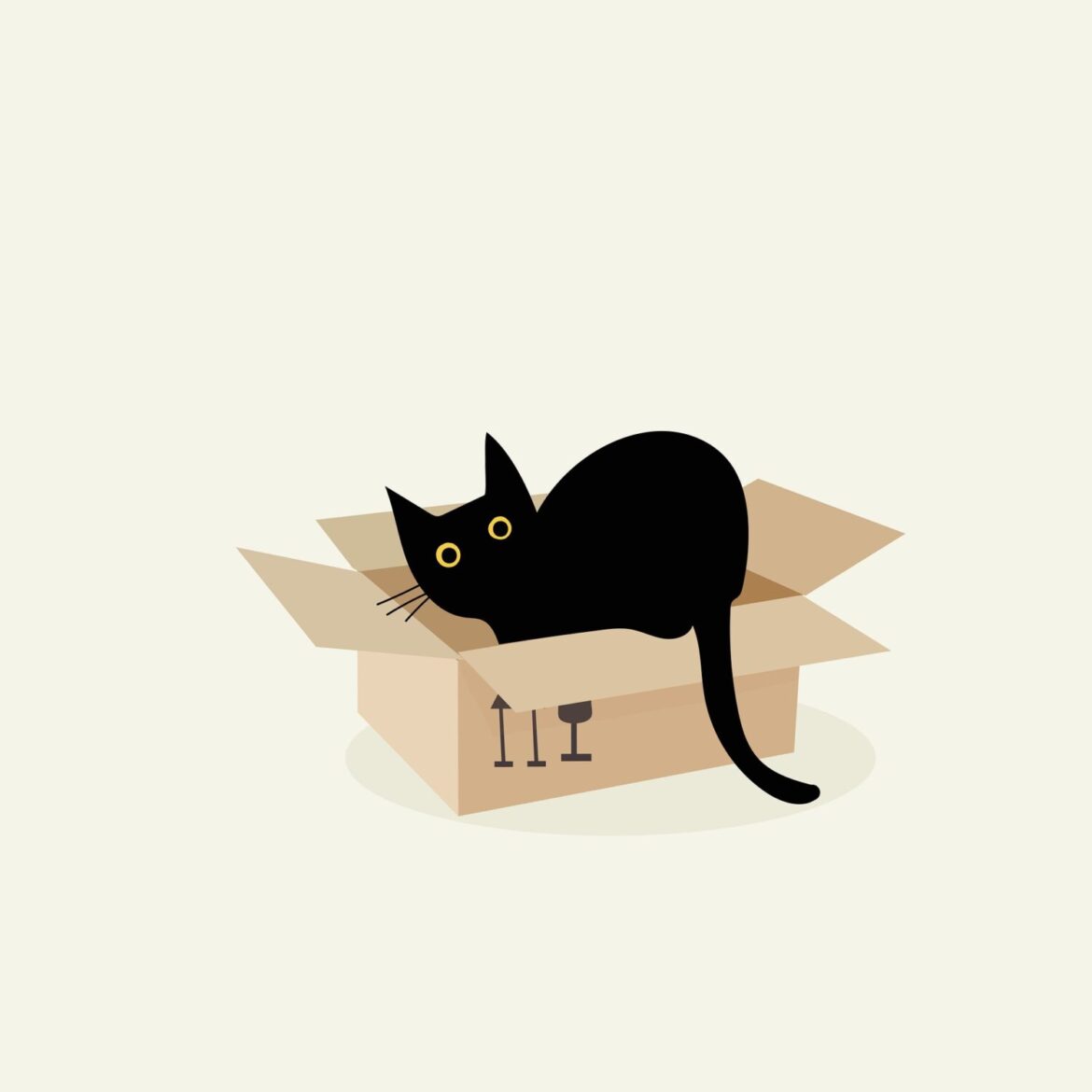
This is the time of year when exciting things (and boring but necessary things) arrive at your door, usually encased in cardboard boxes of varying sizes. The average time between box arriving in house and cat claiming said box is measured in minutes rather than hours – and sometimes, less than a minute. Cats will sit on boxes. They will sit on a teetering tower of boxes. Empty the box and presto – there’s a cat squeezing itself into the box before you can say ‘Recycling’. If they can’t find a box, they’ll settle for paper – put a newspaper on the floor and the cat will sit on the article you’d like to read and dare you to move her.
Why do they do that? Nobody knows except the cat, but everybody has a suggestion.
Security
Cats squeeze into the smallest of spaces. Scared cats in a new home will hide behind fridges, under the sofa or on the very top of the curtains – anywhere they know that nothing scary will be squished into that space with them, ready to launch an ambush. A box just smaller than they are will give them a feeling of security and it is a great place from which to spring their own surprise attack.
Warmth
Cardboard and paper are efficient insulators. Any cat that has parked its furry fundament on a piece of cardboard – especially corrugated cardboard – has discovered that wonderful mellow warmth being reflected back at them. Finding a cardboard floor and four snug cardboard walls surrounding them on all sides is just pure luxury.
Scent
Cats rely heavily on scent to make sense of the world around them, and they have scent glands in their cheek and in their bottom to mark a thing or place as ‘theirs’. By sitting in the box or on the paper, they are marking it with their scent – claiming this strange new thing in their territory. You’ll find that they are keen to sit on new boxes but will one day ignore them – because the scent-marking work is complete.
Sound
That crinkle sound of fresh newspaper… the soft sigh of corrugated cardboard being crushed or bent. Cats are curious animals and they love to have something new to explore. Something that makes a strange sound is fascinating.
HEY!!! LOOK AT ME!!!
They sit on the newspaper or book you’re reading because… you’re paying attention to the newspaper when you should be looking at the cat. So they sit right in the spot you are looking at. While never (of course) lowering themselves to look at you in return.
Or maybe… because it’s square?
It’s no surprise that scientists are just as curious about why cats choose to sit in strange places – scientists are naturally curious about the ‘why’ of everything. Gabrielle Smith and her team published a study in the journal Applied Animal Behaviour Science in 2021 called “If it fits, I sits.” The team asked the custodians of 500 cats to run an experiment at home (where the cats would be less stressed than in a laboratory environment) in which the owners taped squares to the floor for their cats to sit on (or not). Some of the squares were square and others were designed to be wonky. The cats almost always ignored the not-quite-square shapes, but a third of the cats who bothered to complete the experiment chose to settle their furry behinds in the middle of the taped squares time after time. No, Ms Smith has no idea why they prefer squares. Cats are mysterious creatures.
A Very Smart Cat
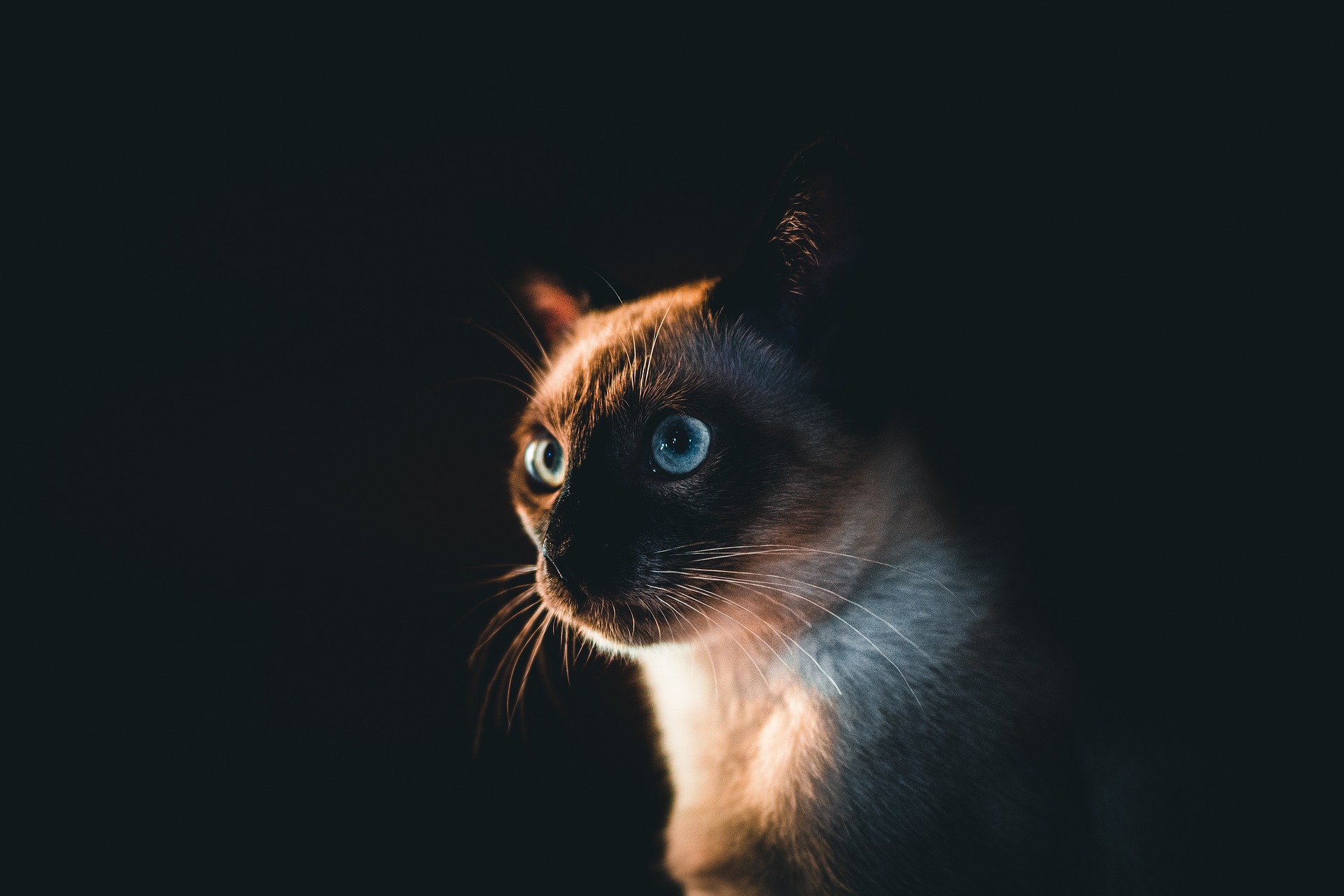
I’ll finish this month’s blog post with an amazing scientific Siamese. In 1975, Jack Hetherington of Michigan State University offered a carefully-typed scientific paper on the behaviour of the Helium-3 isotope for publication to ‘The Physical Review of Letters’ Just before he submitted it, he realised that he’d accidentally written the entire paper as if he had had a team of researchers, rather than just himself. He didn’t have time to re-type the whole thing to correct every ‘we’ to ‘I’ – so he told the journal that the paper was co-authored by F.D.C. Willard. After the paper was accepted and was beginning to be cited in other research papers, he admitted that his ‘co-author’ was Felis Domesticus Chester Willard – his Siamese cat. Chester went on to be quoted as co-author on other scientific papers and submitted a paper as sole author to a French scientific journal. Jack Hetherington has never said whether Chester sat on his typed manuscript before it was submitted, but… I bet he did.
Merry Christmas and Good Elf to all our customers (and their humans).
