
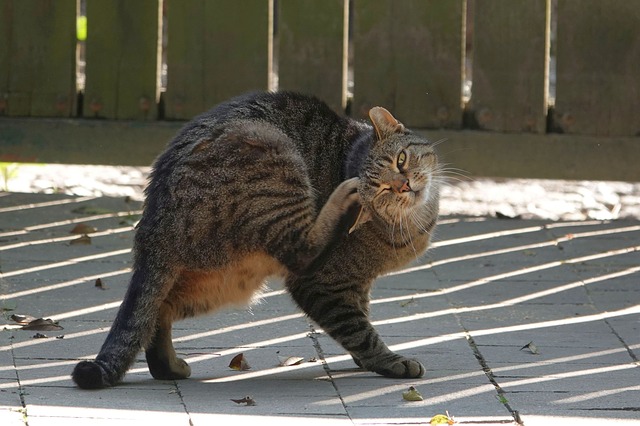
Summer is coming. Longer days, more chance of warm weather – and more chance of your cat coming home with fleas. You are going to hate this blog, but it has to be said. With the climate changing, flea season starts earlier than ever these days.
Actually, fleas may not be the worst part. Any cat coming into contact with long grass or areas where livestock graze might return home with ticks. In both cases, your cats will be irritated. They’ll twitch, groom far too often and scratch vigorously in an attempt to dislodge the pests. That irritation will be shown in the way they react to their humans, too – less tolerance of fuss, less inclined to settle and relax. You might notice bald patches where the grooming has worn away the fur faster than it can regrow, or sore spots where fleas have bitten.
Both fleas and ticks bite and suck blood. A young kitten or a cat suffering from other illnesses will be weakened if the fleas aren’t removed, becoming lethargic, anaemic and (in very severe cases) dying. In addition, the commonest flea to hitch rides in cat fur carries the larval stage of tapeworms. The cat grooms the flea out of its skin, eats the flea and earns another problem.
Let’s not dwell on what happens when the fleas escape from the cat and take refuge in your cosy home to lay their eggs… Stop this. Time to evict fleas and ticks for good.
It’s possible to get flea, tick and worm treatments from pet-shops and supermarkets these days, but these are less effective than the treatments that vets can prescribe. The fastest way to evict all kinds of parasites is to get treatment from your vet, either as liquid to be dropped onto the back of the cat’s neck (the place they are least able to groom it off) or in tablet form. You know how easy (or not) it is to persuade your cat to take a tablet, so judge for yourself which is the best. The vet will prescribe a treatment appropriate for your cat’s weight, so always check that you’re giving the right medicine to the right cat.
Very young kittens will suffer badly from even a mild case of fleas and they won’t be able to withstand chemical flea treatments. If you have kittens in the house and you notice dark specks moving in their fur, you will need to comb the fleas out. Hold the kitten gently, dampen his coat and comb through its fur with a wetted flea comb. He’ll be indignant, but it’s a good way to get him used to being combed and held. Rinse the fleas out of the comb in a jar of water after each stroke.
If you’ve been unlucky enough to have fleas in your home, there are treatments for household bedding and carpets, but follow the instructions – the adult fleas will have left eggs to hatch, and these need to be killed as well. Wash affected covers in hot water.
That wasn’t much fun to write – or to read, I suspect – but hey. The job’s done. Leave a week after giving your cat flea treatment to let the cat recover before giving worm treatment. Then wait for the cat’s grateful thanks. Grateful thanks! Just kidding. But they do forgive you and trust me, they feel much more comfortable for it.
 Yeah… that feels better.
